barefoot and healthy
foot sensation trails
foot gymnastics
barefoot parks
barefoot in nature
barefoot prosperity
barefoot galleries
barefoot park
design guide
for landscape architects
Author:
Lorenz Kerscher,
Penzberg, Germany

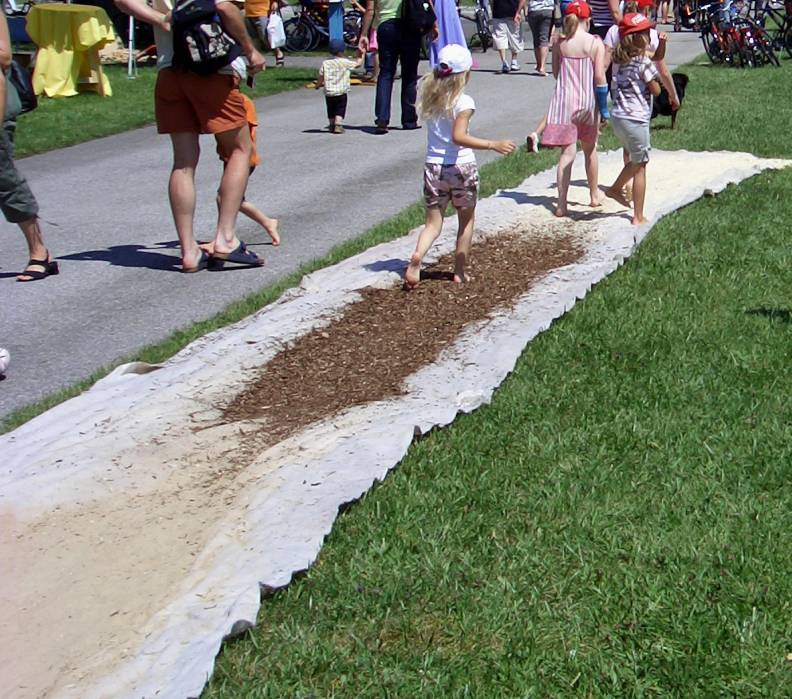
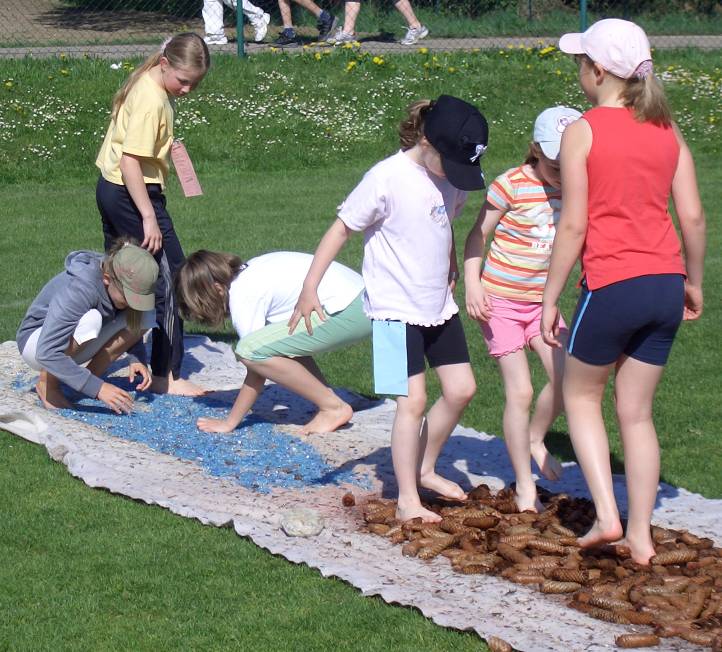
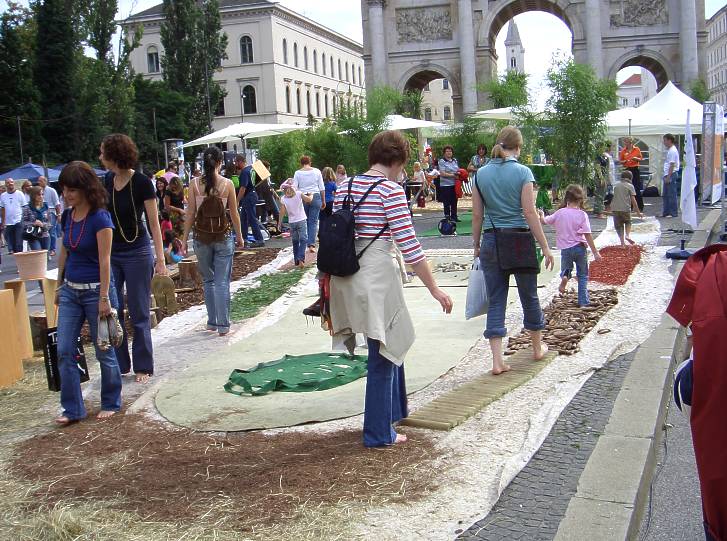
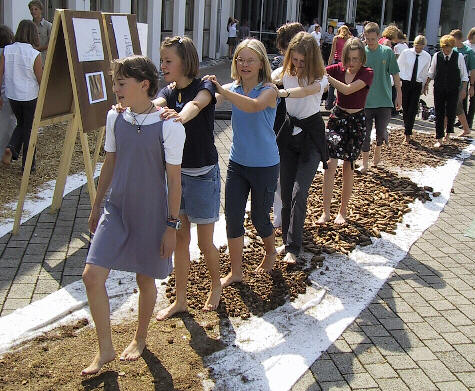
Foot Sensation TrailsPeople who organize open air events should not miss the chance to provide a foot sensation trail as a central attraction! A little barefoot park at a suited location is not much effort but lot of fun for the visitors. As an example, let's have a look at the City of Munich. A paved space
between triple traffic lanes on each side would not appear a good place for
going barefoot. But twice a year the road is closed, and for a weekend, the
dead traffic island turns into a lively barefoot park. This is accomplished
by a short dozen of helpers within two hours and will motivate up to 10,000
people to take off their shoes and enjoy barefoot life for some ten minutes
or even longer. |
 |
|
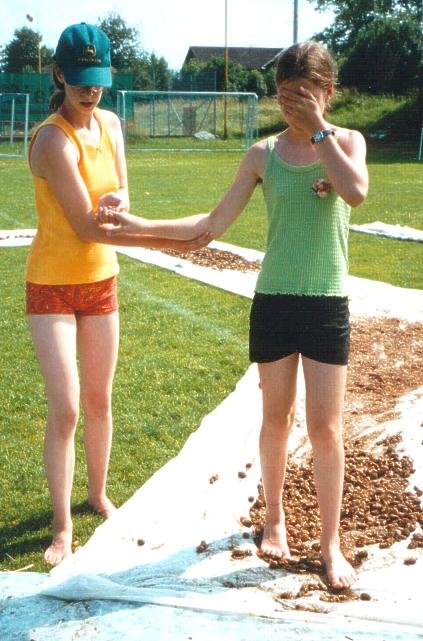
Foot sensation trails can also be placed on sports grounds, |
|
|
|
and can be adapted to any sports, school, church, town, children's event.
For a better impression please have a look at the |
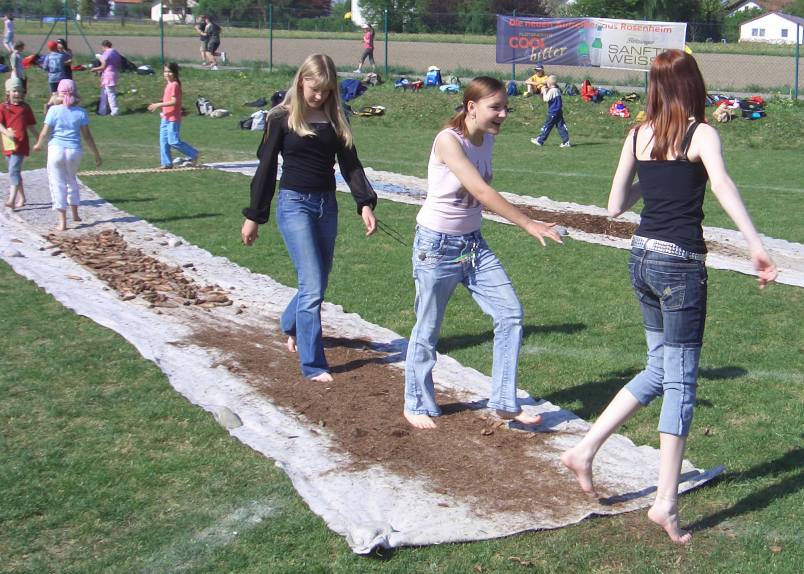
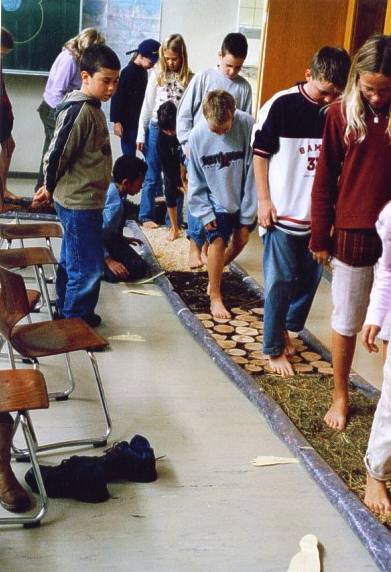
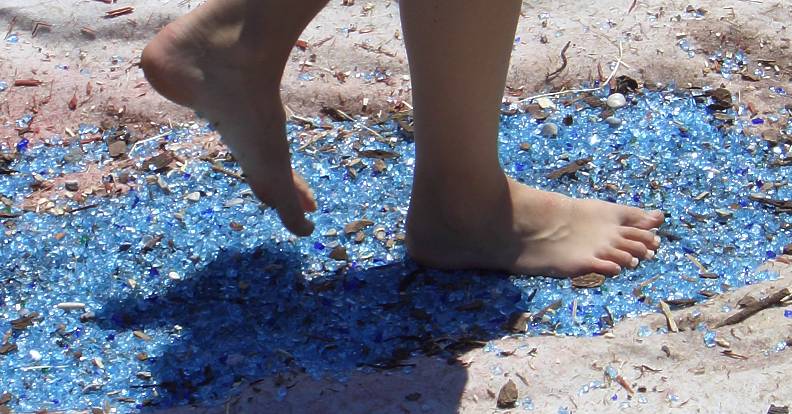
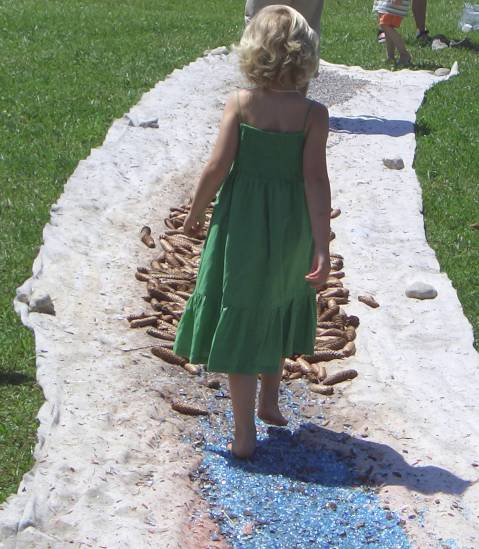
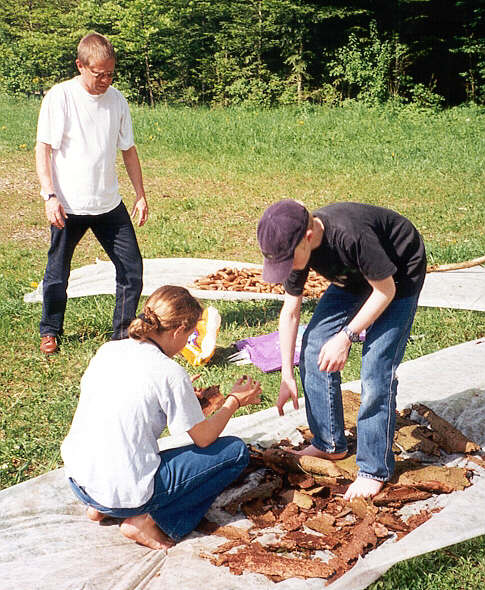
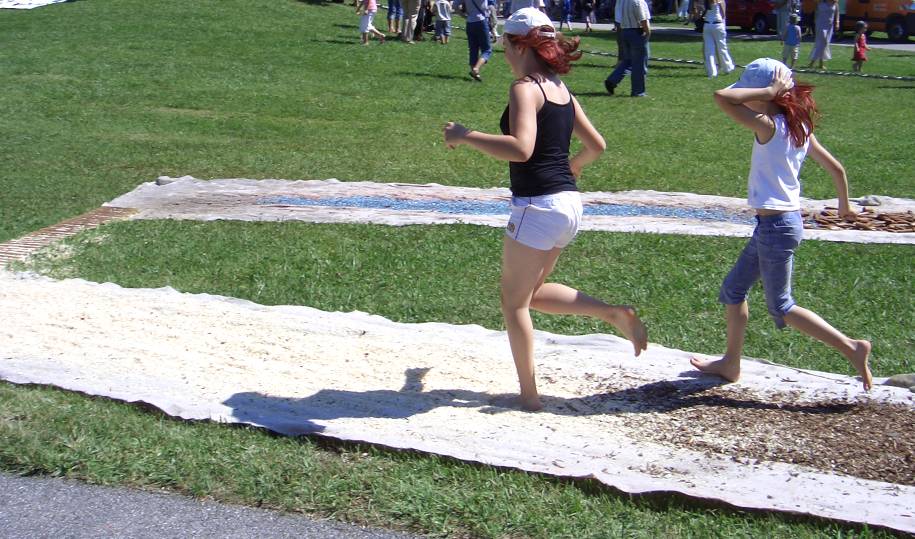
Instructions for assembling a foot sensation trailThe easiest way is to place the materials on fleece webs, which are about 1.5 meters (5 ft) broad. This is practicable on lawn as well as on hard floor and ensures easy removal after the event. BasicsThe fleece webs are placed according to the space available and pinned down with stones (on lawn) or twin-sided adhesive tape (on pavement etc.). A V-shaped arrangement with a total path of 20-30 m (65-100 ft) is practical. In summertime, the surrounding grass should be cut before making up the trail. This helps to keep off bees, which might be attracted by flowering clover. Be aware that materials tend to spread out during use of the barefoot trail! Therefore keep some distance to the sides and about 1 m (3 ft) between the different materials. This initial gap will be disappear within a short while. Materials
Suited glass can be purchased as recycled material Remaining materials can be stored in boxes or jute bags. Plastic bags are
only suited for dry materials. |
|
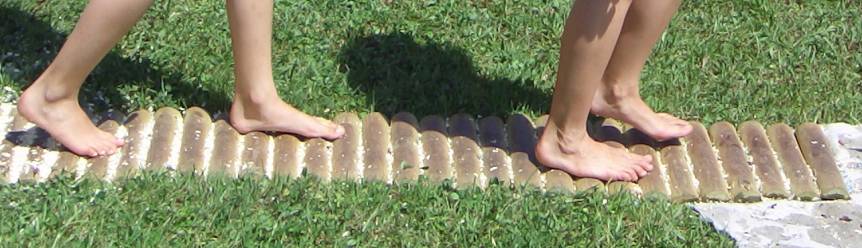
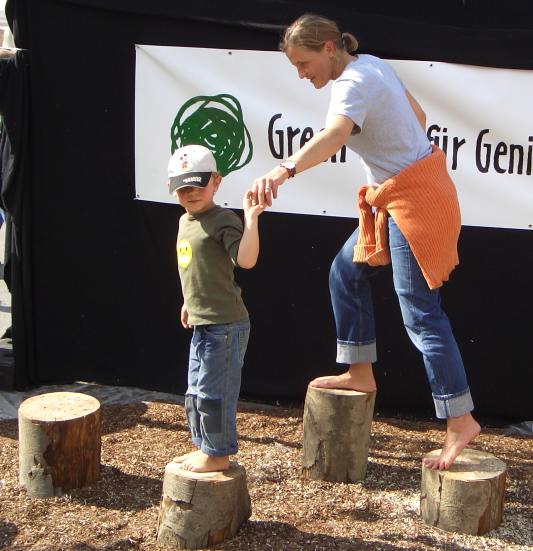
Wooden variationsPieces of tree trunks for balancing exercise shall not wobble. Alignments of half-round timber may not only serve as garden bed borders, but even more to connect the fleece webs of barefoot trails!
|
|
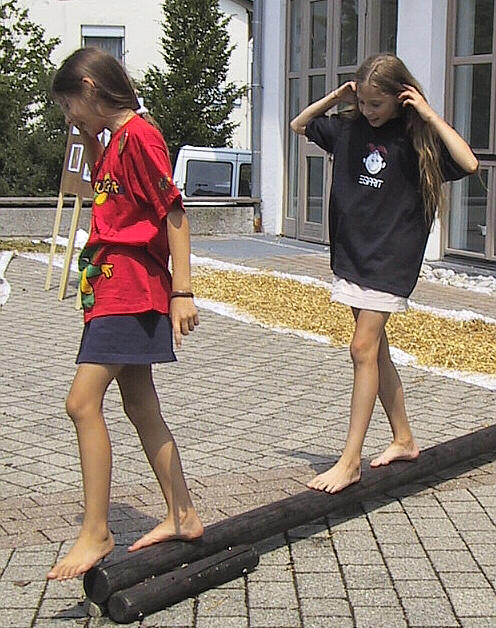
Balancing and vitalityA balancing stem may round out the foot experience trail. It needs to be blocked against rolling. Everyone can find his own way to practice his sensory skills. Visitors, especially children, may like to feel the different materials with closed or blindfolded eyes. They may be guided by hand or walk in a line with the hands on the shoulders of the foregoing person. Others will walk, run, jump, enjoy foot games or even dance -- let them stay on free feet!
|
|